
Compare Trempealeau County Value Terms
A Trempealeau County property record may tie a parcel to an assessment, while a deed records a transaction. Different sources answer different questions. The county's legacy search warns that assessments may not be final until Board of Review, and its own data stopped updating in 2025. The county-linked Ascent route is the current one. Its live value field names may differ from older views. Read the record's year and status before comparing numbers.
| Value | What It Is | Where |
|---|---|---|
| Assessed value | Value assigned for the local property tax process. | County assessment record; current field label needs live verification. |
| Market value | Estimated price a property might bring under ordinary market conditions. | Assessment method under Wisconsin DOR guidance; not a parcel sale quote. |
| Sale price | Price from a specific transaction, if recorded or otherwise documented. | Deed or transaction record; local index field was not verified. |
| Assessment ratio | Assessed value divided by sale price for an individual sale. | Wisconsin assessment analysis. |
Wisconsin DOR describes the assessor’s objective under Wis. Stat. §70.32 as full value, or what could ordinarily be obtained at private sale. That standard explains the method, not a guarantee about one property’s current sale price. An assessment ratio for one parcel and the municipality-wide assessment level are also different measures. A transfer price can offer context, but the research did not verify where consideration appears in the current county online interface.
Keep the assessment year with the number because Wisconsin’s framework values property as of January 1 of the assessment year. A current web display can therefore describe a specific valuation date even if market conditions later changed. The legacy portal warns that assessment fields may remain unfinalized until Board of Review. A value without its year and review status is an incomplete comparison, whether it is being read from a parcel card or discussed with an assessor.
Wisconsin Ratios Give Trempealeau Values Context
The Wisconsin Property Assessment Process Guide separates an individual assessment-to-sale ratio from an assessment level. The first compares one parcel's assessed value to a sale price. The second measures how all assessed values in a municipality relate to equalized value. Neither term means the same thing as a market appraisal. The distinction matters. It matters when a Trempealeau County parcel is set against local averages or state reports.
- Assessed value
- The local value entered for the property tax system.
- Market value
- The amount that could ordinarily be obtained at private sale under the state framework.
- Assessment ratio
- Assessed value divided by the sale price for an individual sale.
- Assessment level
- The municipality-wide relationship between total assessed and equalized values.
The DOR assessment guide defines the terms. The local parcel's own year and review status still control how its number should be read.
Find a Trempealeau County Assessment by Parcel
Trempealeau County now points to Ascent as its Real Estate Search. The legacy interface still works as a field guide. It warns that its data stopped updating in 2025.
Start on the county Property Search landing page. Find the parcel, then note the value year, the municipality, the parcel number, and the assessment status on the card. Because Ascent uses its own labels, do not assume a legacy label carries over unchanged.
- Use the county Property Search page to reach the current Real Estate Search.
- Find the parcel by address or number and save the value year and municipality.
- Read the assessment as a tax-system figure, not as a price quote.
- Check recorded transfer information separately when a sale price is needed; the current display field was not verified.
- January 1 valuation
- Wisconsin’s assessment framework values property as of January 1 of the assessment year.
- Equalized value
- A statewide comparison measure, not an individual parcel appraisal.
- Last sale
- A transaction value that may need confirmation in a recorded document or another source.
Board of Review Can Change the Value Status
The legacy county search carries a warning. Assessments may not be final until Board of Review. So any number on an online card needs its year. Its review status belongs beside it.
Wisconsin municipalities generally hold Open Book and Board of Review from late May through mid-June. Some meet later. The calendar is local, and it shifts by year. At Open Book, an owner can sit down with the assessor and discuss the value. If that talk does not resolve the dispute, the owner may file a formal objection. Board of Review handles it under state procedure.
DOR guidance lays out the timing. A notice of intent is generally due at least 48 hours before the first meeting. The written objection is due within the first two hours of that meeting. Confirm current requirements on the state calendar. Confirm them with the local clerk as well. Do not rely on any of it before then.
These are municipal proceedings. A countywide window cannot replace the schedule for the parcel's own municipality. The state calendar helps you find the local meeting date and the assessor's contact. Check that listing against the current municipal notice anyway. If an objection is likely, ask the assessor one thing first. Which record and value year are under discussion? Confirm the required notice or form before the filing window opens.
The Wisconsin Open Book and Board of Review calendar is the state's route. It lists municipal dates and assessor contacts.
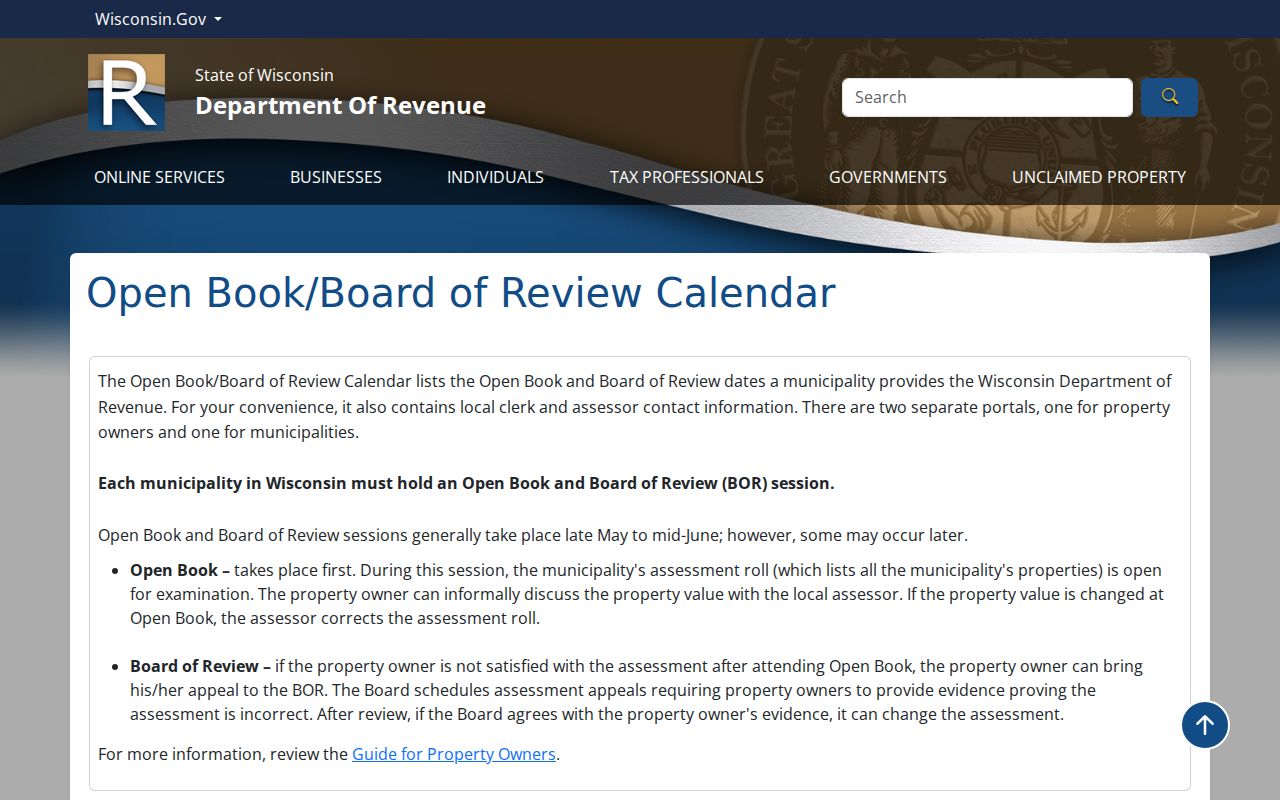
Note: Meeting dates vary by municipality and year, so confirm the current local notice before relying on any deadline.
State Sales Reports Explain the Assessment Level
Wisconsin DOR released its final 2025 sales reports on March 24, 2026. The reports gather arm's-length sales from across the state. They also carry assessment-to-sale ratios. These help estimate the January 1, 2026 level of assessment in each municipality. That is how sales data shapes statewide and local valuation work. What the reports do not offer is a parcel-by-parcel price list for Trempealeau County.
For a figure tied to one property, the county assessment record is the place to start. Check the assessment year it displays. A deed is the better source. Use it when you need the actual amount a parcel sold for. The Ascent interface shows no sale-consideration field. The recorded deed fills that gap. The DOR report notice explains the data initiative behind the reports.
What a Trempealeau County Value Does Not Promise
An assessed value serves the tax roll alone. It is not a sale price. It is not a listing recommendation either. Nor does it stand in for a licensed appraisal. Markets can shift between assessment dates, and the online record may still carry a value under review. When a purchase, an estate, or a financing decision depends on current value, bring in a qualified appraiser and weigh the relevant market evidence rather than treating the assessor entry as a quote.
Value vs. price. A Trempealeau County assessed value is not what a property will sell for. It is a tax-system figure, not an appraisal.
Keep the Value Separate from the Tax Bill
A parcel value and a tax bill answer different questions. The assessment gives the tax system a number. The bill lists the charges. A payment record shows what has posted. The county's legacy portal warns that December and January payments may not be final until the mid-February settlement with municipalities. So an unsettled payment belongs with the municipal treasurer. A value dispute follows its own path. Open Book and the Board of Review handle assessment appeals. Exemptions, charges, and due dates belong with the assessor or treasurer. The county publishes no consolidated local exemption list. For bills, payment timing, and appeals, the Trempealeau County property tax records route has the detail.
Historic Rolls Add Context, Not a Current Appraisal
UW–La Crosse's ARC holds intermittent Trempealeau County tax rolls from 1856 through 1930. Gaps are part of the collection. A missing year may reflect coverage, not a shift in value or ownership. Check the series detail first. A historic roll can still do real work. It can place an owner or parcel in a township at a point in time. What it cannot do is produce a modern assessment, a taxable balance, or an arm's-length sale price for that same parcel. Old rolls work best beside other sources. Pair them with a deed, a plat, and a present-day parcel record. The ARC also lists plats beginning in 1877 and mortgage records from 1855 through 1884. Together these explain land continuity. They do not supply a market opinion. That requires current assessment and sale evidence. Keep the historical question distinct from a present-day value conclusion.