
What Trempealeau County Property Tax Records Show
A single Trempealeau County tax lookup returns several numbers. They are not interchangeable. The county's Real Estate Search is the current linked route for parcel and assessment-linked data. The legacy portal stopped updating in 2025. Its warning also says current assessments may not be final until the Board of Review acts. When a payment has not posted or settled, the local treasurer holds the answer, not the assessment file.
| Field | What It Shows | Where |
|---|---|---|
| Assessed value | Value assigned to the parcel for property tax purposes. | County assessment / Real Estate Search |
| Assessment level | Municipality-wide relation between assessed value and equalized value. | Wisconsin DOR guidance |
| Exemptions or adjustments | Parcel-specific relief or adjustments, if shown; a local list was not verified in the research. | Ask the assessor or municipal clerk. |
| Tax bill and payment status | Charges and amounts received; some timing details depend on the local treasurer. | County or municipal treasurer |
| District rows | School, technical-college, county, and other district references shown on the sample card. | Parcel card and tax bill |
Wisconsin's DOR frames the assessor's goal as full value. That means the amount ordinarily obtainable at a private sale, under Wis. Stat. §70.32. It is not a fresh appraisal. Nor is it a parcel's likely price today. A tax bill carries more than the assessment number anyway. Read any Trempealeau County value with its assessment year and review status before comparing it to anything. District rows explain why bills differ. The sample parcel lists school, technical, and county districts. A bill reports charges for one year. Different districts or billing years change the amount due even when two assessment figures look similar. Let the bill and the current treasurer record explain charges rather than reverse-engineering them from the owner card.
Wisconsin Assessment Terms for Trempealeau Parcels
One ratio tracks a single parcel. Under DOR definitions, it compares that Trempealeau County parcel's assessed value with a sale price. The assessment level is broader. A municipality's level compares assessed values across all its parcels with equalized value, and neither figure predicts what a property will sell for.
- Assessed value
- The value assigned to the parcel for the tax system, tied to the assessment record.
- Assessment ratio
- For an individual sale, assessed value divided by the sale price.
- Assessment level
- A municipality-wide relationship between total assessed value and equalized value.
- Equalized value
- A state measure used to compare local assessments; it is not a parcel appraisal.
The Wisconsin Property Assessment Process Guide from the DOR defines both terms and walks through the assessment process. Use it for the framework. Then turn to local assessment and Board of Review materials for the parcel itself. One ratio covers one parcel. It sets one assessed amount against one sale price. The assessment level is a municipality-wide measure. It compares assessed value across the municipality with equalized value. Neither is a correction factor for one Trempealeau parcel, and a statewide ratio should never stand in for a new appraisal when a value looks out of line.
Find the Bill and Payment Status Separately
Trempealeau County's current property route runs through Ascent. The old portal still shows parcel and tax fields, but its data cutoff came in 2025. Use the county landing page for the current system. A December or January payment is a treasurer question. The county's warning is blunt. Those payments are not final until the mid-February settlement. The county-linked Ascent entry screen marks the current route for assessment-linked parcel information.
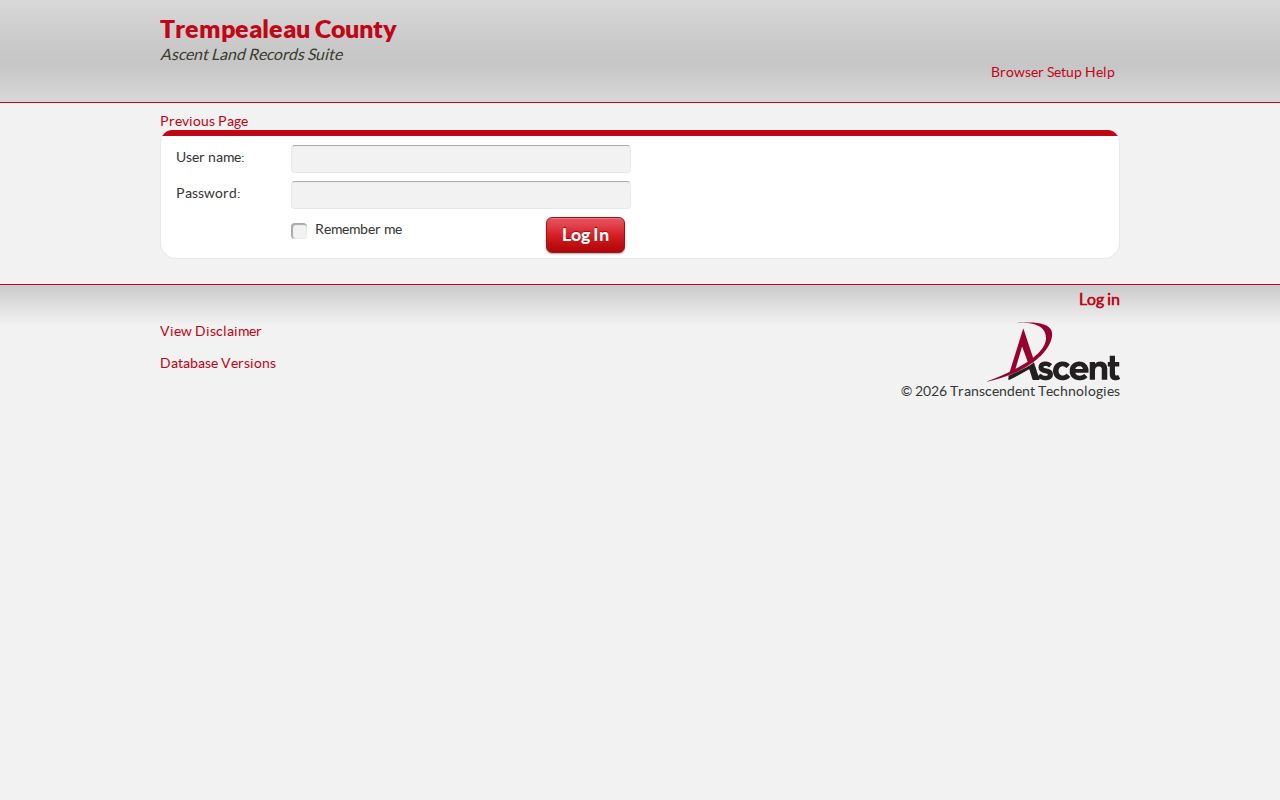
If the login-style entry shows no public parcel search, start from the Trempealeau County page instead.
- Find the parcel in the county-linked Real Estate Search and keep its number and municipality.
- Read the assessment year and value apart from the tax bill total.
- Ask the local treasurer which payment period and posting date apply to the balance question.
- For a dispute, check the municipality’s Open Book and Board of Review calendar rather than relying on an old portal notice.
- Tax bill
- The charges due for a parcel and tax year.
- Settlement
- The county’s mid-February reconciliation with municipalities that affects payment finality.
- Open Book
- The informal stage to review an assessment with the assessor.
- Board of Review
- The formal local board that hears a timely objection under state procedure.
Mid-February Settlement Changes the Tax Check
The old county portal warns about timing. December and January property tax payments go to local municipalities, and the county system does not show them as final until the mid-February settlement. A missing posting is not proof of nonpayment. Ask the municipal treasurer instead. Some personal-property payments never appear there. Assessment finality is a separate question. A value can still sit before the Board of Review even after a bill goes out. Keep the billing year, payment date, municipality, and parcel number together when you call an office. The legacy portal screen shows the older search route and its status warning.
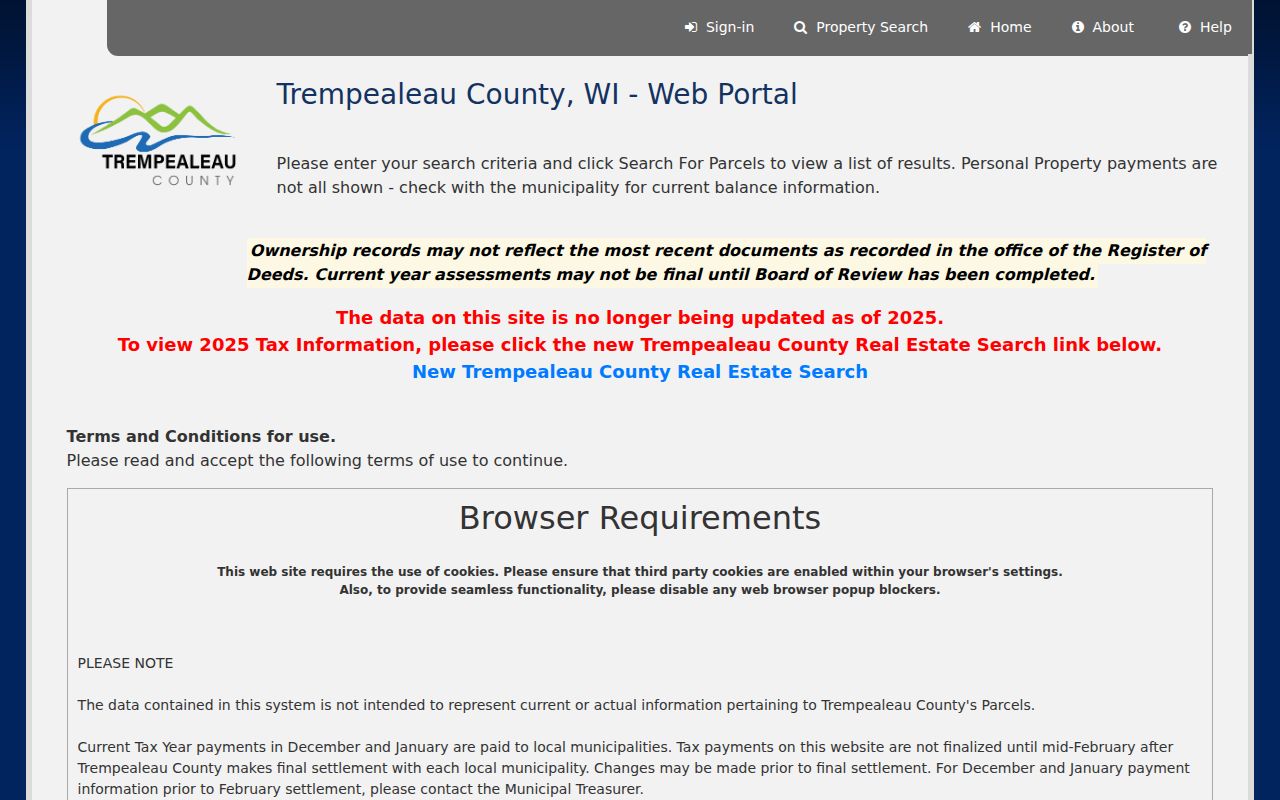
The legacy screen is useful for learning the field names. Confirm current data through the county-linked Ascent route. Payments and values live in different records. The assessor owns the value question. The treasurer can say whether a payment posted or a balance remains, and before settlement the old portal itself directs people there. Name the tax year and installment. Otherwise a prior bill gets mistaken for the current cycle.
Review an Assessment Through Local Boards
Open Book and Board of Review sessions give owners a formal way to question an assessment. Open Book comes first. It is an informal sit-down with the assessor. The two talk through the value on the tax roll. If that conversation settles nothing, the owner can file an objection at Board of Review. Wisconsin municipalities usually hold these sessions from late May into mid-June. A few meet later, though. The local calendar governs, so check your municipality's listing each year.
Timelines matter once an objection starts. State guidance expects a written notice of intent. It must arrive at least 48 hours before the first Board meeting. The written objection itself must arrive within the first two hours of that meeting. DOR lists PA-115A as the objection form, while PA-813 and PR-302 cover other steps. Confirm the current form versions and local filing directions before submitting a challenge.
The DOR calendar links municipal sessions across the state. The appeal guidance walks through the procedure in more detail. The same Wisconsin Open Book and Board of Review calendar is a direct route to local dates. It also lists assessor contacts for Trempealeau County communities.
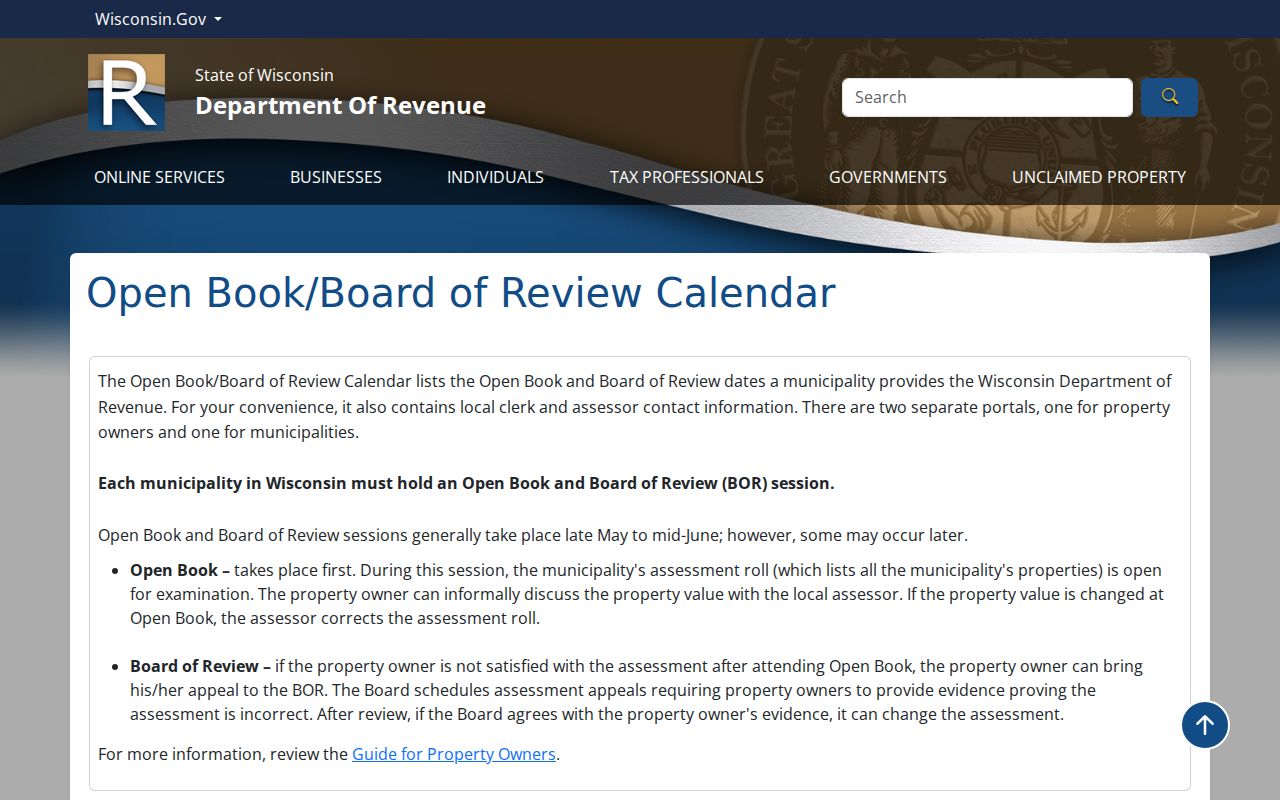
The live calendar is the source to trust for dates. Confirm the current year's local session dates there before relying on any general timing rule.
Appeal window. Dates depend on the municipality and year. Check the DOR calendar and local clerk; the general notice and objection windows are short, so confirm them before filing.
Historic Trempealeau County Tax Rolls
UW–La Crosse's Area Research Center holds Trempealeau County tax rolls from 1856 through 1930. Coverage is intermittent. No roll exists for every year. Read the ARC collection description for surviving dates. It also tells whether a roll is on site, on microfilm, or in another catalog. Old rolls can place a property or owner in a township before today's parcel system.
The ARC's county holdings describe the tax series plus mortgage, court, probate, and plat records.
Old tax rolls list owners by name, and names repeat across generations. Match the roll entry to a deed or plat before you treat an old owner as tied to the modern parcel.
Wisconsin Sales Data Helps Set Assessment Levels
The Wisconsin Department of Revenue posted its final 2025 sales reports in March 2026. Those reports gather arm's-length sales and assessment-to-sale analysis. Assessors use the statewide numbers to estimate the January 1, 2026 level of assessment. The data is assessor-facing. It is not a public price list for each Trempealeau County parcel. A parcel's value still rests on its assessment record and any local review process.
Keep that distinction in mind. A statewide trend and a property card can seem to disagree. Sales analysis shapes the system. It cannot tell a buyer what one property will command. For a parcel-specific question, request the assessment record from the county. Then check the current review calendar. The DOR sales-report note explains the state initiative.
Tax Delinquency Needs a Current Custodian Check
Trempealeau County publishes no countywide delinquent-tax list, redemption schedule, or tax-sale calendar. Treat an old portal row with caution, since the legacy data stopped updating in 2025. Ask the county or municipal treasurer for the balance. Ask for the posting status on the specific parcel and tax year.
When a foreclosure or tax-sale question reaches court, WCCA offers docket clues. The Clerk of Court holds the file. A sheriff-sale notice alone does not prove title passed. Confirm any completed transfer through the recorded deed. Get final status from the proper office rather than a stale list or third-party summary.
Delinquency details often turn on the parcel's taxing municipality. They also turn on the stage of any court action. Give the treasurer the parcel number and tax year. Ask whether the amount is current, delinquent, or awaiting settlement. In a sale or foreclosure, rely on two separate confirmation points. Use the docket and the recorded conveyance. The Wisconsin Circuit Court Access search is a statewide starting point. Use it for a case number or docket event tied to a parcel.

A docket helps you locate a court file. The recorded deed and the current treasurer record remain the separate proof for title and payment questions.